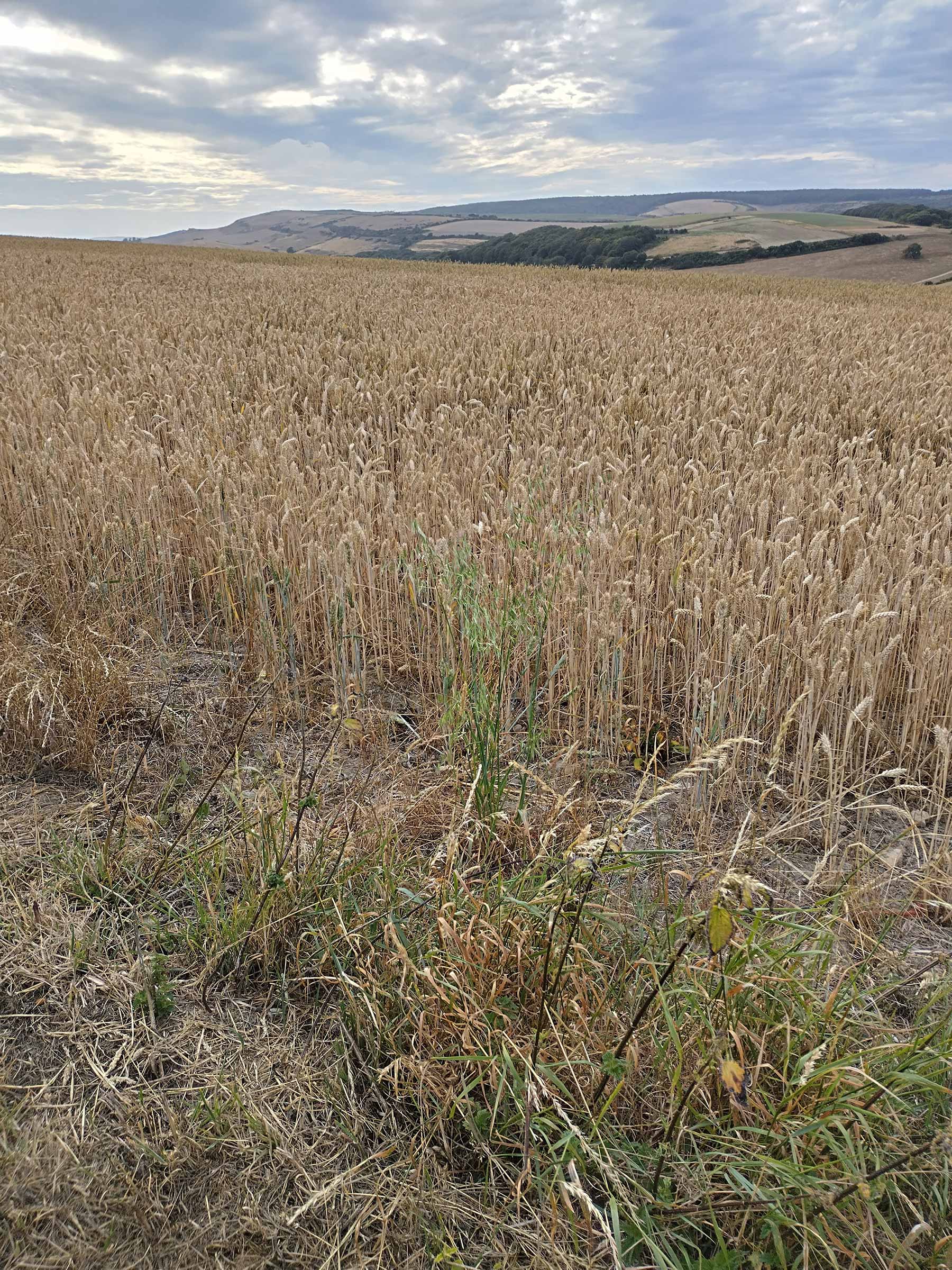
As the drought continues, the importance of water to the landscape becomes very visible. The lack of water causes crops to mature earlier, grass stops growing, ponds, rivers and streams no longer run and many habitats become vulnerable to wildfires. The effects of prolonged drought can be devastating to habitats and wildlife that are not adapted to the lack of water. All wildlife needs water for growth and to regulate their body temperature as well as species that need to feed, shelter and bring up young in a water-dominated environment. Our rivers and streams are important habitat for water voles, water fowl and insects such as dragonflies and fish. Livestock also suffer with lack of water sources particularly if they are in more isolated locations which depend on natural water supplies and as the grass they feed on cannot continue to grow.
We can help by conserving water use at home so there is more available in the environment – our drinking water includes sources such as the eastern Yar and Medina – in your garden by providing shallow drinking pools for bird, insects and mammals and by taking care not to use naked flames and other sources of ignition (barbecues etc) in the countryside.
The Isle of Wight National Landscape encourages the planting of trees and hedges which provide shelter and shade for livestock and wildlife, provides grant aid for pond restoration and has recently produced a Climate Change Adaptation Plan to inform the efforts of ourselves and our partners in adapting to the inevitable new normal.